23rd March 2026
7 Reasons Audiophiles Are Ditching Their CD Player for the Brennan B3 [9,000 Owners Can't Be Wrong]

James Whitfield
Article Author - The Audio Insider
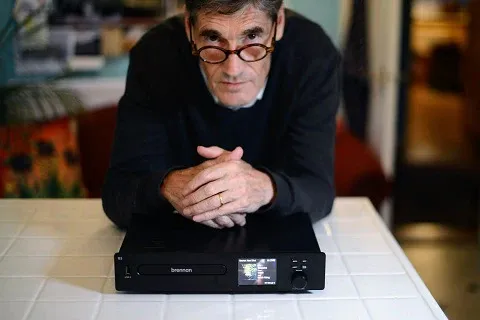
Something has been quietly happening in the audiophile world over the last 4 years. 9,000 people have ditched their CD players and never looked back. Not because they gave up on their collections. Because they finally found a device that solved their CD collection problem. This is what they discovered.
The device is called the Brennan B3, and it was built by a man who had the same problem as everyone on that list. Martin Brennan is a Cambridge-trained physicist who spent years watching his CD collection gather dust while his ageing transport slowly gave up.
He looked at what was available. Music servers that needed a separate amplifier. Rippers that needed a separate NAS drive. Multi-box setups that cost thousands and still require a degree of technical patience most people do not have. Nothing did the whole job in one place at a price that made sense.
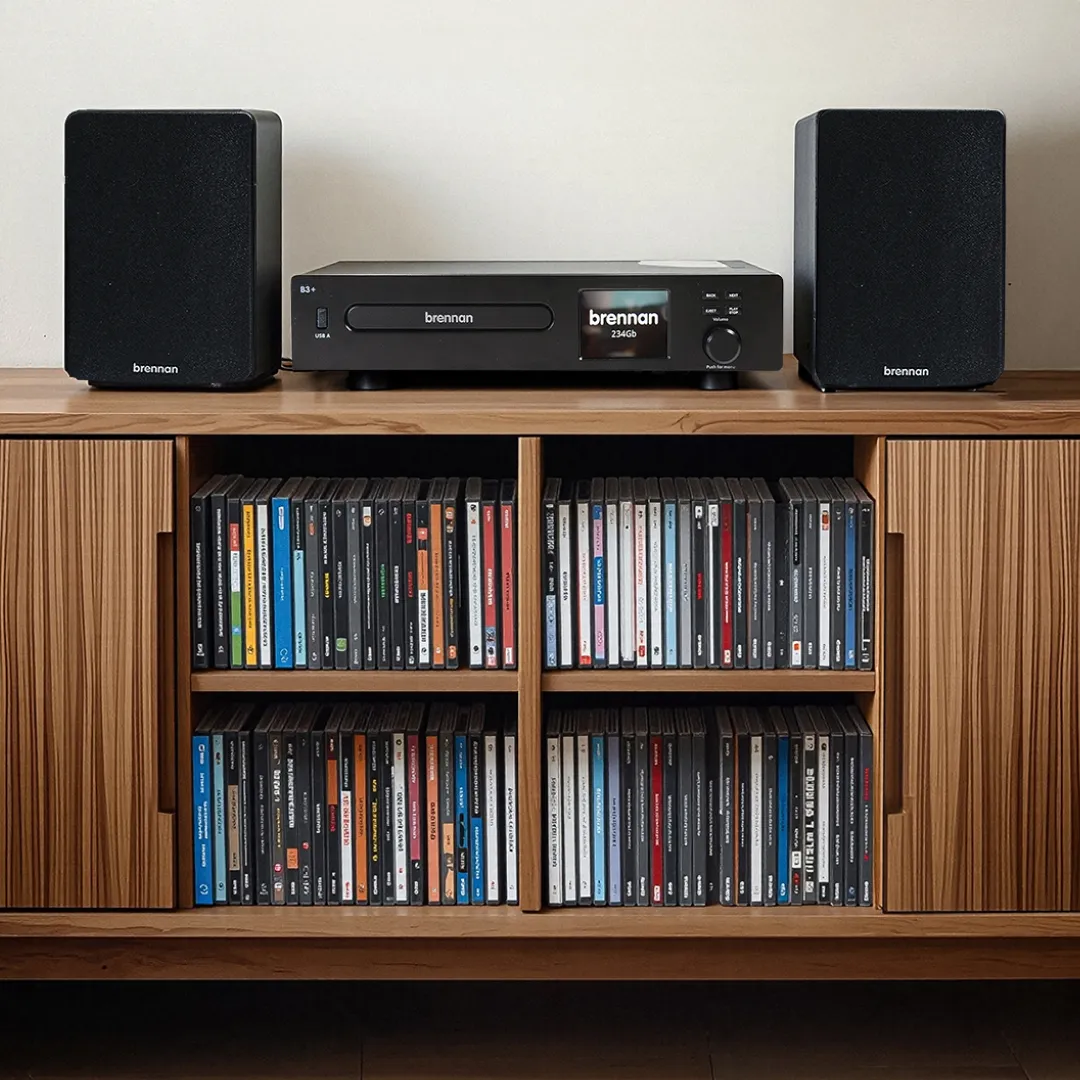
So he built it himself. A single compact unit that rips CDs, stores them in lossless quality, streams to Sonos, drives speakers directly through a built-in amplifier, and sits on a shelf without a tangle of cables behind it. The B3 is the latest generation of that idea.
Here is why it has found 9,000 owners and counting.
Reason 1: Lossless FLAC ripping - hear your CDs the way they were actually recorded
Spotify streams at 320kbps. It is a lossy format, one that discards audio data to reduce file size. What you hear is not the recording. It is a compressed approximation of it.
A lossless FLAC rip is different in kind, not just degree. It is identical to the original CD. Not better. Not close. Identical.
There is no higher quality version of that recording. When you play a FLAC rip through the B3, you are hearing exactly what was laid down in the studio.
Think about what that means in practice. Every album you have ever bought, every record you hunted down, every disc you paid full price for on release day. You have been listening to a degraded version of it. Not because that is all that exists. Because that is all streaming will give you.
The B3 rips every CD in lossless FLAC and stores it at full quality. Owners consistently report the same experience in the first week: albums they have owned for decades suddenly sound the way they remember them sounding. Some say better. Whether that is the quality or simply the act of properly listening again is hard to say. Probably both.
Reason 2: 4,400 CDs on a single 2TB drive - your entire collection, one tap away.
The average serious collector owns somewhere between 500 and 1,500 CDs. That is a significant amount of shelf space, a lot of broken or scratched jewel cases, and a fairly reliable source of domestic friction. The hinge goes on one case. The disc slides out of another. You spend four minutes locating something you know you own before giving up and putting Spotify on instead.
The B3's 2TB hard drive stores up to 4,400 CDs in lossless quality, or 9,000 as MP3. Every album fully indexed, searchable by artist, album or track, and playable in seconds from the front panel, the Brennan app, or any web browser on the same network.
The cases can go in the loft. Or the skip. The music stays, organised and waiting, the moment you want it.
Reason 3: 40x rip speed - a full CD archived before your coffee goes cold
The assumption most people make is that ripping a large CD collection is a chore. With a laptop and a USB optical drive it often is. Slow transfers, metadata that comes back wrong, artwork that refuses to load, track names that need correcting by hand. Hours of admin for every hour of music.
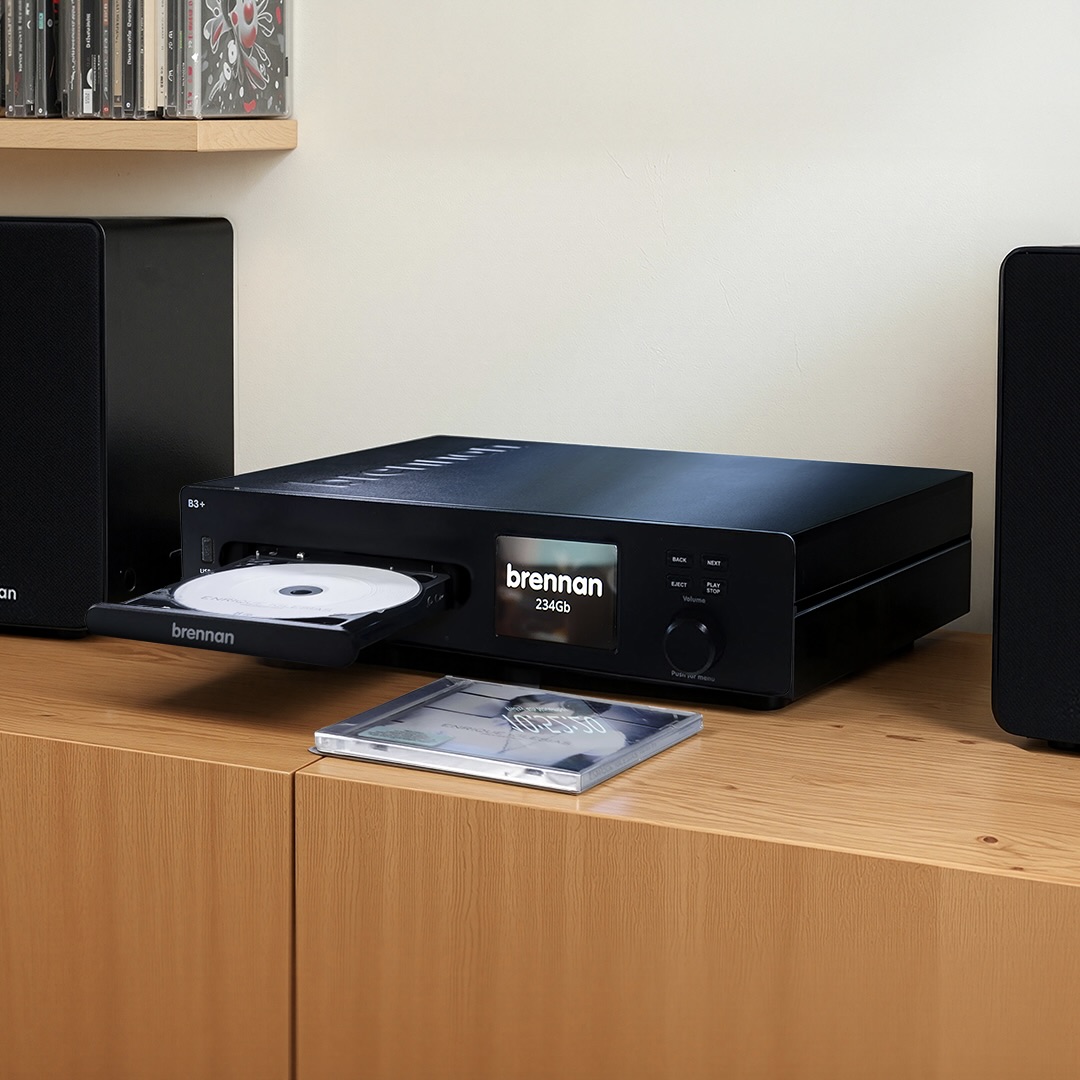
The B3 rips at up to 40x speed. Most discs take a couple of minutes, depending on condition. Scratched discs can take longer. Album art and track data are pulled automatically as each disc is ripped.
A stack of 10 CDs takes less time than a coffee break, and 200 CDs in a weekend is common. The B3 is considerably faster than any DIY alternative most have tried.
Reason 4: Native Sonos integration - the album in your living room is now playing in your kitchen
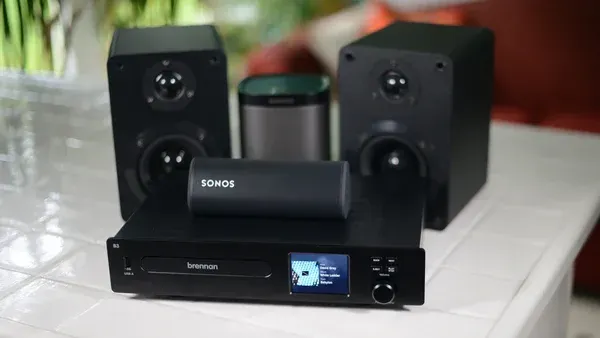
Sonos solved the multi-room problem for a lot of people. The speakers are good, the setup is straightforward and the whole-home experience works. The one thing it never solved is the CD collection sitting in the corner with no way into the system.
If you already have Sonos speakers in your home, the B3 connects to them natively. No additional hardware, no third-party workarounds. The B3 finds your Sonos system automatically on the same local network.
From there you choose the room, or rooms, from the front panel, the app or a browser. The same album can play throughout the house or different music can play in different zones simultaneously.
For anyone who bought into Sonos for convenience but never found a clean way to get their CD collection into it, this is probably the most immediately useful thing the B3 does.
Reason 5: No subscription, no compression - stop paying Spotify for music you already own
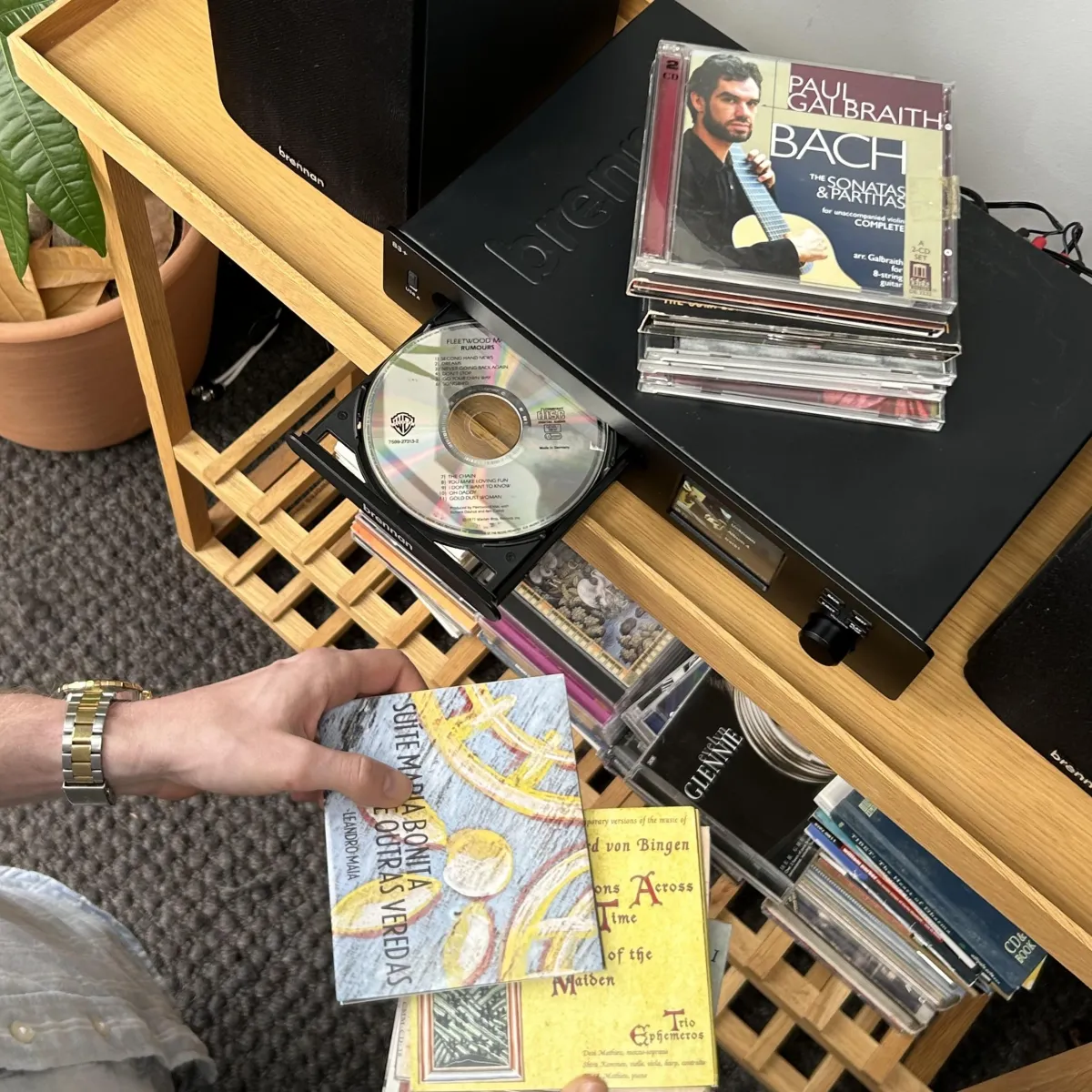
Spotify costs around £120 a year. Over ten years that is £1,200 spent on music you will never own. Not a single track belongs to you. If an album is removed, the price goes up, or the service shuts down, it disappears. For anyone with a sizeable physical collection this is a reasonable thing to find more than mildly irritating.
Then there is the sound. 320kbps lossy compression versus 1,411kbps lossless FLAC. The difference is not subtle on a decent system. You are not imagining it. You are hearing a version of the recording that had data removed before it reached your ears.
The B3 does not require a subscription. You rip your CDs once, at full lossless quality, and they are yours indefinitely. The ongoing cost after purchase is nothing. For someone with hundreds of CDs already on a shelf, the maths tends to sort itself out fairly quickly.
Reason 6: Built-in 20W + 20W amplifier - four separate components replaced by one box
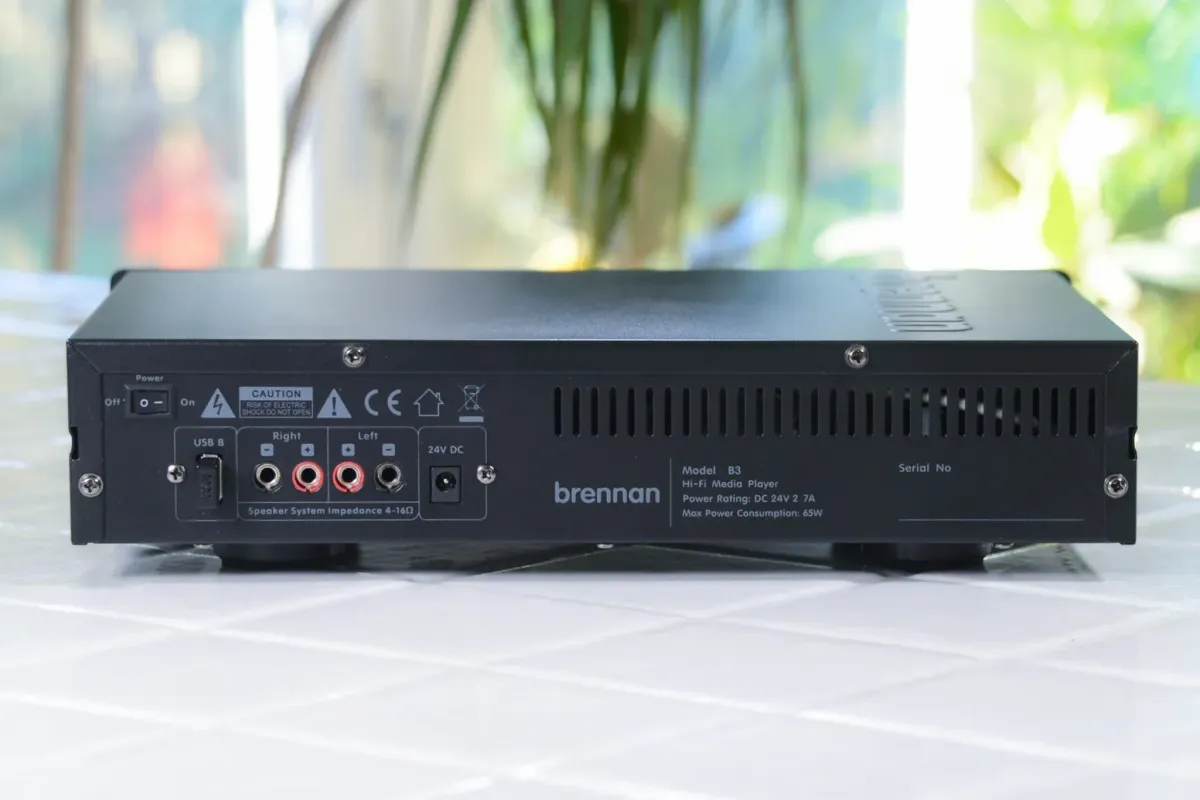
This is the detail that separates the B3 from most of its competitors. Devices like the Naim Uniti Core, the Bluesound Vault and the Melco N100 are storage and streaming units. They do not include an amplifier.
To build a comparable setup around any of them you need a separate CD ripper, a separate amplifier and a separate streamer. Four components. Four sets of cables. Four things to configure, update and eventually replace. The Naim Core plus a decent separate amplifier will cost upwards of £3,800 before you have added anything else.
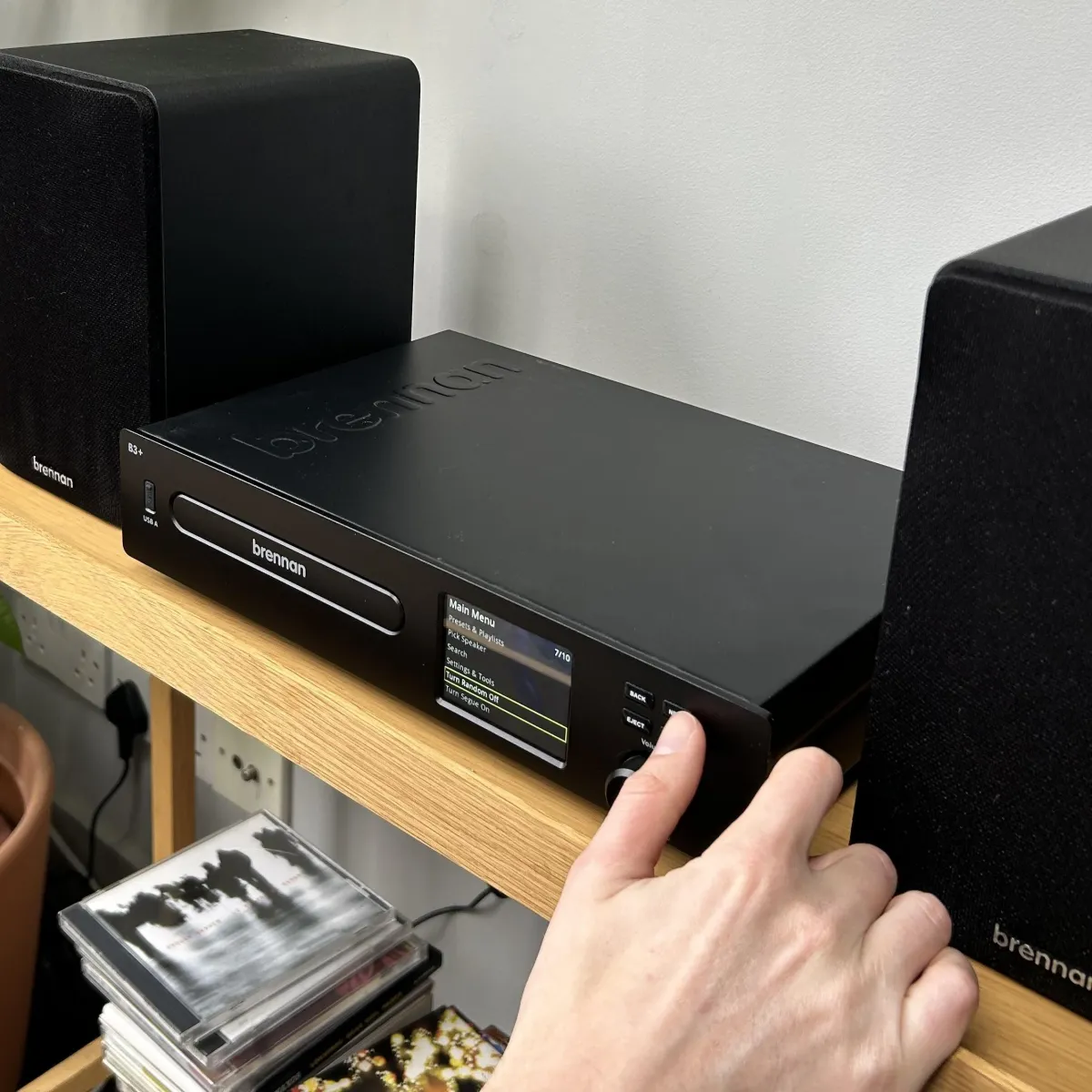
The B3 includes a 20W + 20W Class-D amplifier. Plug your existing speakers directly into the back and the setup is complete. No additional components, no extra cables, no separate remotes.
For those who want to connect to an existing amplifier or DAC, the B3+ model adds optical and electrical outputs. The built-in amp is there for those who want simplicity. The outputs are there for those who want to augment an existing hifi system.
Reason 7: A Cambridge physicist. A British company. 24 years of updates. The last hi-fi upgrade most owners ever make.
Martin Brennan is a Cambridge-trained physicist who has designed over 20 silicon chips, including work on the Atari Jaguar. He built the first Brennan device in 2007 because he wanted a better way to manage his own CD collection and nothing on the market did what he needed.
The B3 is the latest generation. It has a 4.6-star average across hundreds of Trustpilot reviews, a reported 97% keep rate and a forum of over 6,000 members. The B2, launched in 2015, is still receiving firmware updates. Brennan has been in business for 24 years.
None of that makes it the right choice for everyone. If you are happy with streaming, have no strong attachment to your CD collection, or are looking for audiophile separates at the highest end of the market, there are other options worth considering.
But for someone with a large CD collection, ageing playback equipment and no appetite for a multi-box DIY setup, it is difficult to find a more direct solution at anything close to the price.
The Bottom Line
For most owners it comes down to three things. Hearing their collection in lossless quality for the first time and realising what streaming had been taking from them. Rediscovering albums they had not touched in years. And getting all of it playing through Sonos, throughout the house, without a single extra device.
9,000 people bought one. Almost none of them sent it back.
Every B3 comes with a 30-day no-quibble money-back guarantee and a 1-year warranty. If it does not deliver, send it back. No questions, no hassle.
The only regret most owners have is not buying one sooner.
See current pricing and order today at brennan.co.uk
The brennan B3
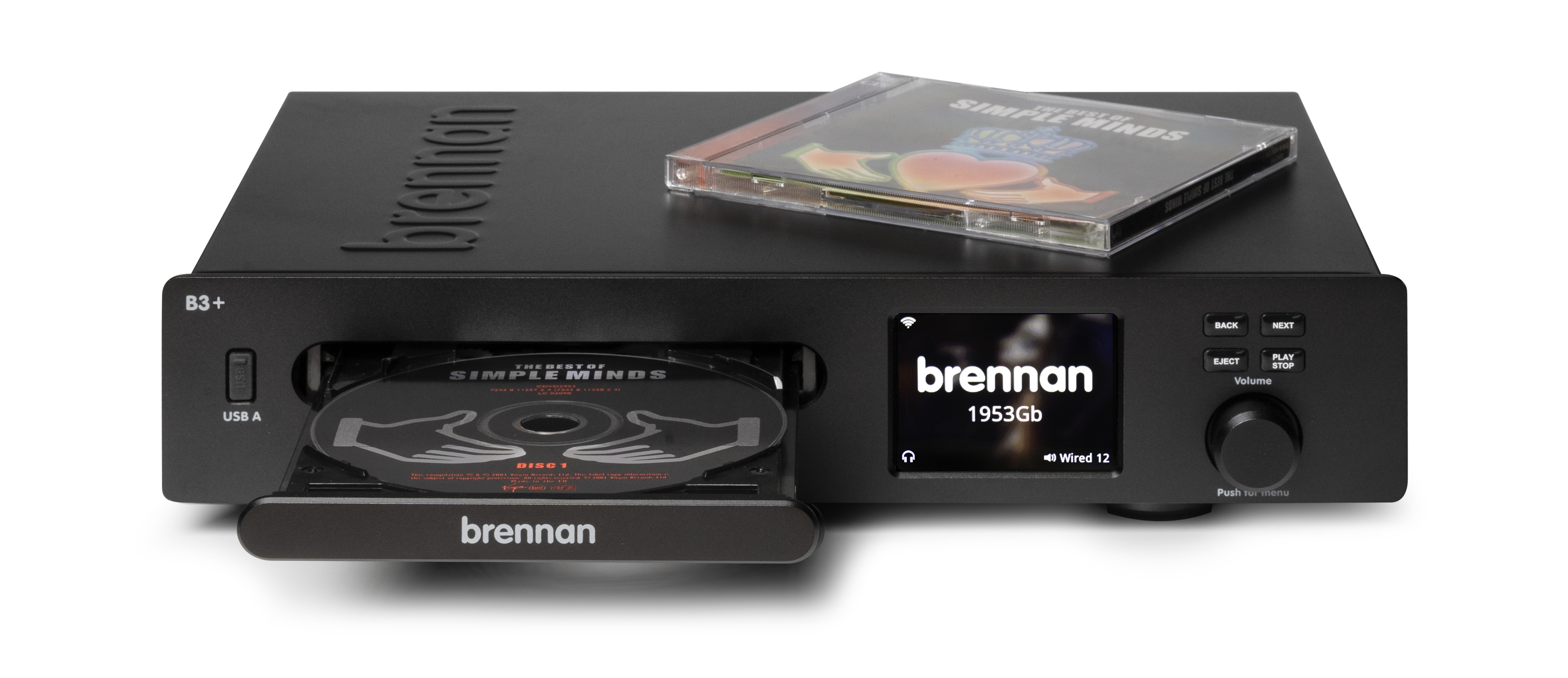
The B3 is not the only device in this category. It is, however, the only one that does the complete job in a single box. CD ripper, music server, streamer and amplifier.
The Swiss Army knife of audio equipment, at a price no comparable setup comes close to matching.
ADVERTISING DISCLAIMER
This article is paid promotional content produced by The Audio Insider in commercial partnership with Brennan. It has been written to provide genuinely useful information to readers but is an advertisement and should be read as such.
The views expressed are those of the author based on independent research and verified owner testimonials. Individual results and experiences may vary.
This website is owned and operated by 3GA Limited. 3GA Limited has a direct financial interest in the products featured on this page and may receive revenue as a result of purchases made through links contained within this article.
Trademarks appearing on this website are the property of their respective owners. The Brennan name and B3 product are the property of Brennan. No implied or expressed endorsement beyond the stated commercial partnership is intended.